It’s a curious feature of pop music that its grandest-sounding titles often hide its smallest, most tender ideas. “Change the World” is a case in point. Eric Clapton recorded it in 1996 for the soundtrack of the film Phenomenon, and it went on to win three Grammy Awards, spend months at the top of the adult contemporary chart, and become one of the biggest hits of his career. You might expect a song with that title to be a rousing manifesto. It isn’t. It’s a quiet, almost shy declaration of love, and what it’s really about is how far a person might go for one other human being. Let’s see how the trick is done.
A Song That Wasn’t His
Clapton didn’t write it. The songwriters were three Nashville men, Wayne Kirkpatrick, Gordon Kennedy and Tommy Sims, who had been working on the song, on and off, for a good year or so. The idea came from Sims, and the three of them shaped it together. They made a demo, and then spent a long time waiting. It would be roughly five years from the first spark of the idea to Clapton’s recording. That’s the sort of patience that makes you wonder how many good songs have been quietly abandoned in drawers, waiting for someone to ring.
The song’s first recording was actually by the country singer Wynonna Judd, in 1996. But when the film Phenomenon, starring John Travolta, went looking for music, it found its way to Clapton and to the producer Kenneth Edmonds, known to everyone as Babyface. Babyface was the hottest producer in America at the time, and he had taken a shine to the song. Between them they created a version that’s smooth, acoustic and shimmering. It’s a long way from Cream, and a long way from the blues, and yet it’s recognisably Clapton, which is the real surprise of the thing.
A Love Song in the Subjunctive
What makes the lyric special is its grammar. Almost every line is a hypothetical. If I could, the narrator says, I would. Nothing in the song is actually happening. It’s all wishful thinking, offered up by a man who knows that he can’t, in fact, rearrange the heavens. He’d fetch the sun and the stars for her if the rules allowed. The beauty of that is how humble it is. He isn’t claiming powers he doesn’t have. He’s admitting his limits, and offering everything within them, which is rather more honest than the average declaration of undying devotion.
That’s why the title isn’t as grandiose as it looks. The world he’d change isn’t the political world or the planet. It’s the small, particular world of two people, and what he wants is to make it a more hospitable place for her. It’s one of the most intimate things Clapton ever sang, and it’s all the more affecting for coming from a man who had spent decades behind a loud amplifier. The grand title is a sort of joke, I think, a big gesture wrapped around a very small, very sincere wish. And the joke is entirely on the listener who expects a sermon.
The film itself is worth a word. Phenomenon tells the story of an ordinary small-town man who, after a strange flash of light in the sky, finds himself blessed with astonishing mental powers, and who spends the rest of the picture trying to use them for the good of the people around him. You can see why the song suited it. Here was a man who could, apparently, do almost anything, and whose chief wish was to be useful to those he loved. The title became a kind of gentle joke at the hero’s expense: a person who might really be capable of changing the world, and who would happily swap the lot for a bit more time with one person.
Babyface and the Grammys
The partnership with Babyface turned out to be a golden one. When the 1997 Grammy Awards came around, “Change the World” collected three trophies. It won Record of the Year, shared between Clapton and Babyface as producer, it won Song of the Year for the three writers, and it took Best Male Pop Vocal Performance for Clapton. The two men performed the song together at the ceremony, with acoustic guitars, in front of a vast crowd. It must have been a heady night for three Nashville songwriters who had waited so long, and I hope somebody bought them a very large drink.
In America the single reached the top five and sat at number one on the adult contemporary chart for thirteen weeks. That’s a staggering run for a man whose name had once been associated with feedback and fury. It also cemented Clapton’s position as a kind of grand old man of soft rock, which some of his earlier admirers regarded with dismay. I’d say they missed the point. A man is allowed to grow gentle, and a gentle record is allowed to be good. The two things aren’t opposites, whatever the more severe sort of critic might tell you.
The Man Behind the Gentle Voice
It’s worth reflecting on how well the song suited Clapton at that moment in his life. He was in his fifties, a father, a survivor of grief and addiction, and the song allowed him to speak about love without any of the old turbulence. There’s no torment in it, no craving, no jealousy. It’s all offering and no demand. You might call it the antidote to “Layla”, in which a man begs for a woman who won’t have him. Here, he’s trying to give everything away. That’s a very different sort of love, and it takes a very different sort of man to sing it convincingly.
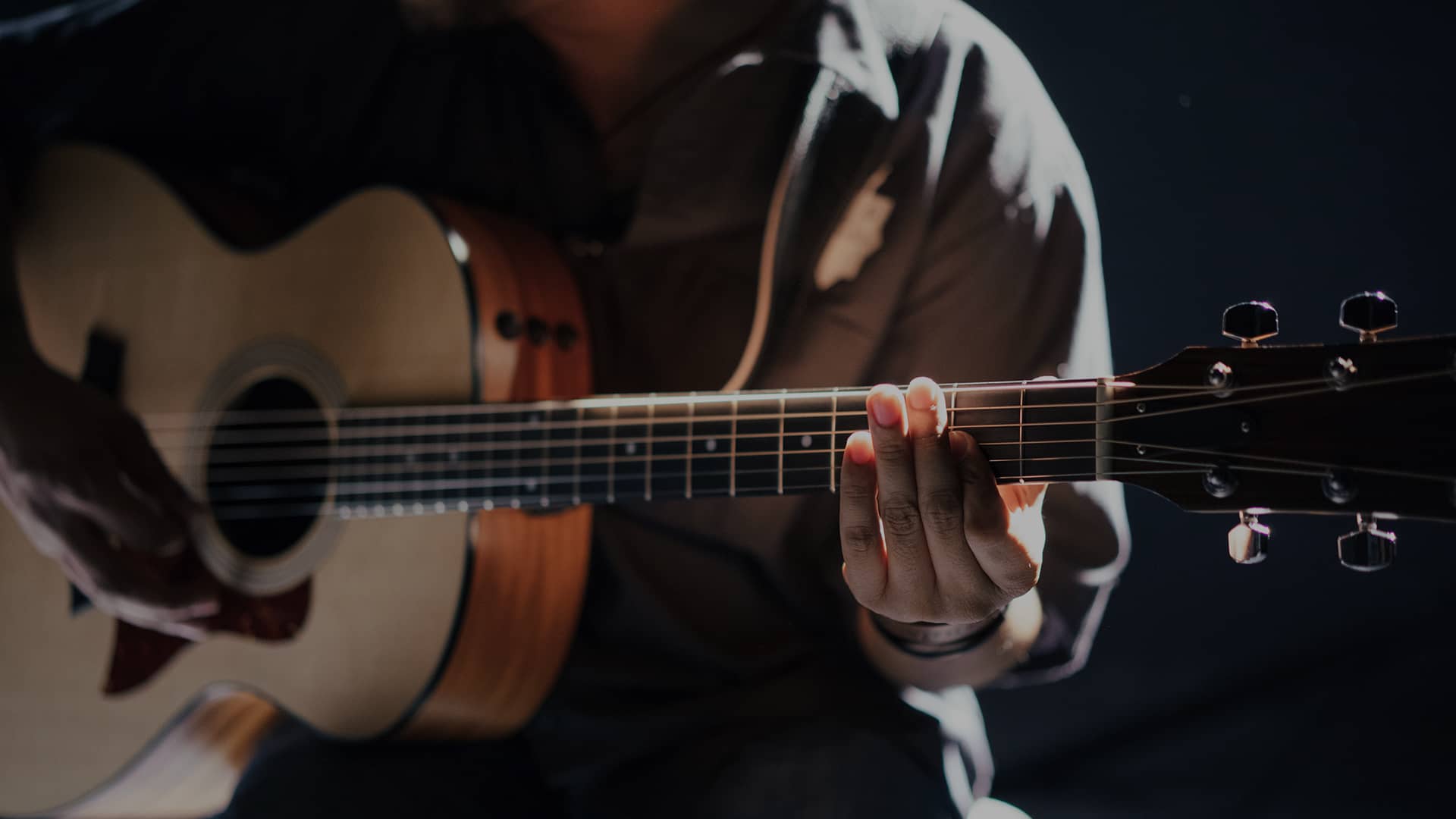
The guitar playing reflects that. It’s spare and delicate, a pattern of notes that glows rather than burns. There’s a lovely, floating quality to the whole arrangement, like a window thrown open on a warm morning. It’s the work of someone who has learned that a note, placed carefully, can do more than a hundred thrown wildly. I’d also say it’s the quiet triumph of Babyface’s production: he understood that Clapton didn’t need dressing up. He needed room. And in that room, the guitar and the voice could simply sit and say what they meant.
The flip side of the single is worth a mention, too: Clapton’s own rendition of the old Irish air “Danny Boy”, which he produced himself. It makes a lovely contrast. The A-side was polished by one of the most successful producers in America, while the B-side is simply Clapton and a very old tune. Putting the two on the same disc tells you he hadn’t lost his taste for the old material just because he’d reached the pop heights. He still had one foot planted firmly in the traditions he grew up loving, and one in the shimmering world of the adult contemporary charts.
Where That Leaves Us
So what does “Change the World” mean? It means that love is largely a matter of wishing the best for someone, and wishing it so hard that you’d re-arrange creation if you could. It’s a small, sweet idea disguised as a big one, and I think that’s why it has lasted. The song asks nothing of you but to listen. Clapton, Babyface and three patient songwriters conspired to make something genuinely gentle, and the world, on the whole, was glad of it. I wouldn’t say it changed anything. But as an attempt, it’s a very pleasing one, and I’m happy to give it the credit it deserves.