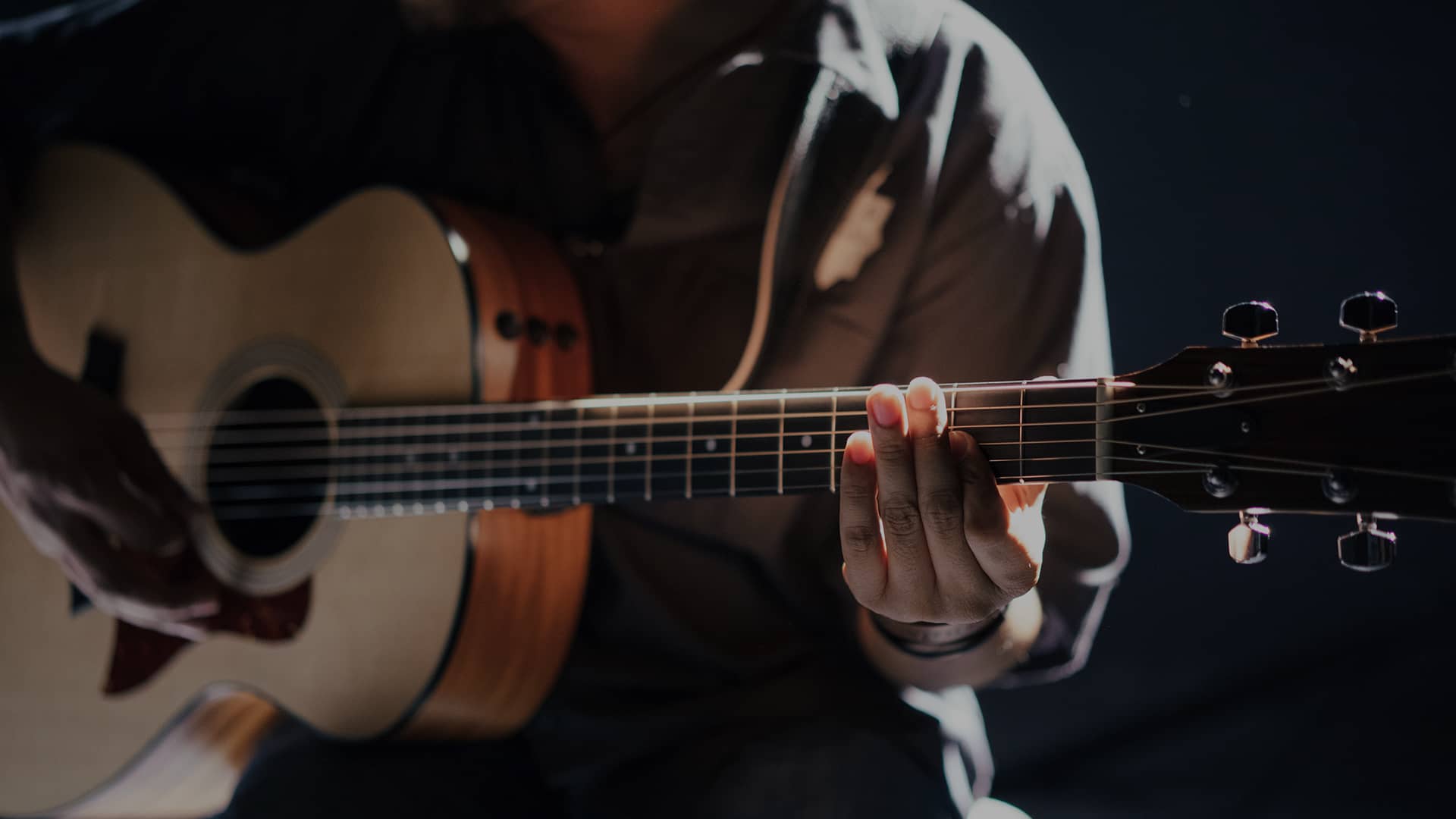
Some songs end when the music stops. Others carry on in the back of your head for the rest of the afternoon, rather like an unwelcome visitor who’s overstayed. “Old Love” belongs firmly to the second group. Eric Clapton co-wrote it with the American bluesman Robert Cray and recorded it for his 1989 album Journeyman, where it sits near the end, running to well over six minutes and refusing to hurry. It’s a song about a love that’s supposed to be over and isn’t. It’s also one of the loveliest things Clapton did in that decade, and I’m slightly cross with myself that it took me so long to appreciate how much it’s quietly doing. Let me try to explain, and I’ll do my best not to rush.
Two Guitarists and a Riff
The way the song came about is almost disarmingly ordinary. Clapton has said it began as a riff he was idly fiddling with in a hotel room, the sort of noodling that most guitarists do between meals and never think about again. He took the idea to Cray, who contributed the turnaround and the bridge, and who is also responsible for the first guitar solo and the long passage at the very end, with Clapton popping up here and there alongside him. It’s a lovely division of labour. One man provides the mood, the other supplies the architecture, and neither of them seems to mind very much who gets the credit.
Cray had made his name in the mid-eighties with a smooth, soulful brand of blues, a clean-edged sound that felt a world away from the howling distortion of the late sixties. Clapton admired him enormously and brought him into the Journeyman sessions, and the two stayed friends. Cray joined him on stage for the song during the long run of concerts at the Royal Albert Hall in 1990, and by all accounts the pair of them were obviously having a wonderful time, trading licks across the stage like men passing the salt. If you ever get the chance to see footage, take it. Two guitarists who plainly like each other is a rarer sight than it should be.
What It’s About
As for what the song is actually about, the lyric deals with a love that has supposedly finished but won’t quite go away. There’s a tug between what the head knows and what the heart refuses to accept. It’s a theme as old as any, and it’s handled here with unusual honesty. Nobody storms out. Nobody throws crockery. The narrator is simply aware that the thing he thought he’d put away is still sitting in the room, and he doesn’t know quite what to do about it. That’s a more truthful picture of how old loves behave than most songs manage. They don’t leave in a blaze. They hang about the doorway, and wait to be noticed.
People have long heard Pattie Boyd in it. Clapton’s marriage to her was coming apart around then, and the album appeared in the autumn of 1989, just as the whole business was drawing to its end. Whether or not that was in his mind when he wrote it, I couldn’t say, and he’s not the sort to make it easy for us. But the song doesn’t need the gossip. It works for anyone who has ever bumped into somebody from the past and found their pulse behaving unreasonably. That’s the great advantage of a song written in soft focus: everyone gets to put their own face in the frame.
How It Sounds
Musically, it’s a slow burn, with a hint of jazz in the chords and plenty of space between the notes. It runs more than six minutes on the album, which in 1989 was a brave length for a record meant to sit alongside radio hits. Nobody hurried it, and nobody should. The two guitars circle each other, one slightly warmer and one slightly cooler, and the rhythm section simply keeps time with great patience. Clapton’s voice has a worn, comfortable quality, like a favourite jumper. He sounds like someone talking to himself in the kitchen at three in the morning, and not especially minding who overhears.
It reappeared on Unplugged in 1992 in a pared-down form, and many people discovered it there. The acoustic version loses some of the smoulder but gains a kind of tenderness, and the extended guitar conversation becomes more intimate, as though the two players have moved their chairs closer together. Both versions are worth hearing, if only to notice how the same song can feel like a distant memory in one setting and a conversation in the next. Not many songs can make that move without breaking, and I think it says something about how solidly the thing was built in the first place.
Why It Lasts
Part of its staying power, I think, is that it refuses to resolve. A great many love songs end with a decision: he leaves, she returns, someone finally gets the message. This one simply fades into the guitars, with nothing settled. That’s rather true to life. Most of us carry a handful of old loves around with us, and we never quite decide what to do with them. We just learn to live with the weight, the way you learn to live with a slightly stiff knee.
It’s also a fine example of what happens when two musicians check their egos at the door. Neither Clapton nor Cray tries to dominate. They leave room for each other, and room for the listener. In an era of enormous, glossy productions, that restraint was a quiet act of rebellion. I’d also say it’s the reason the record sounds so unforced. You never catch it trying to impress you, and, oddly, that’s exactly what impresses.
The title itself deserves a word. It isn’t called lost love, or dead love, or last love. It’s old love, which has a faintly domestic ring to it, like old friend or old house. An old love isn’t necessarily a bad thing, you understand. It’s simply one that has been around long enough to leave marks on the furniture. That choice of word gives the song its curious warmth. It isn’t bitter, and it isn’t broken-hearted. It’s just rueful, in the manner of someone sorting through a drawer and finding a photograph they’d rather forgotten they kept.
The Last Word
So what does “Old Love” mean? I think it means that some feelings don’t retire when they’re asked to. They loiter, they reappear, and they take on new shades with each year that passes. Clapton and Cray found a way to say that without raising their voices, which is the hardest way of all. It’s a song for the long evening, for the second glass, for the moment when you stop pretending you’ve moved on. I’m glad it exists, and I’m a little envious of anyone coming to it for the first time. Put it on when the house is quiet, and see who turns up.